
I grew up in a family that manufactured desert coolers.
Not a factory in the modern industrial sense. More like a small workshop ecosystem. The kind that once existed across many towns in North India. Especially in places where summers were harsh enough to make cooling not a luxury but survival.
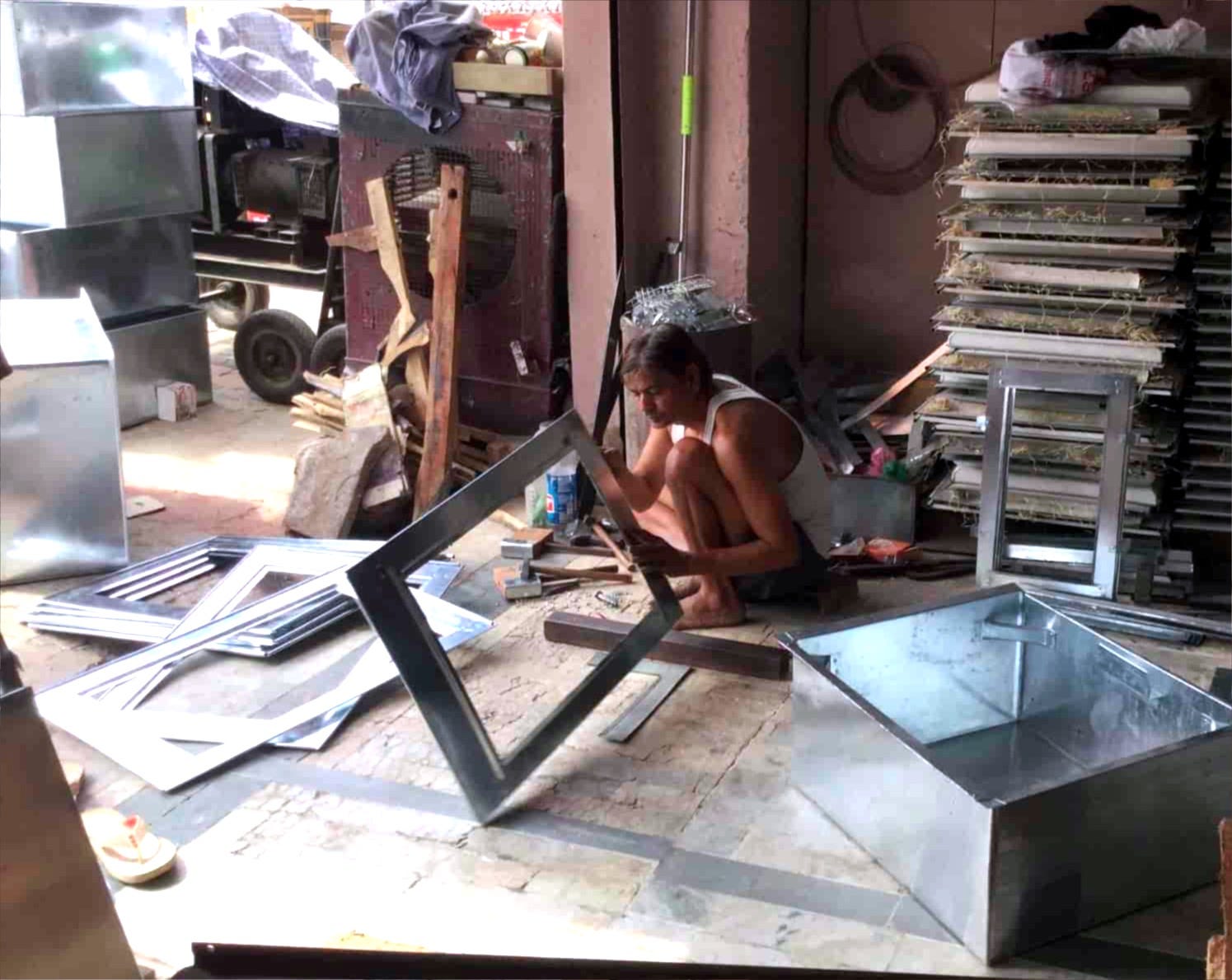
My parents and older brothers would build cooler bodies out of sheet metal. Most likely galvanized steel. The workshop had the smell of metal, paint, dust, water pumps and hot summers. Pumps, fans and cooling pads were usually outsourced. We mainly fabricated the bodies and assembled the systems.
But what stayed with me was not the manufacturing.
It was the thinking.
There was constant experimentation.
Which body shape gives better airflow?
Which sheet thickness vibrates less?
Which pad cools better? Grass pads or honeycomb pads?
Where should the fan be placed?
How do you reduce noise?
How do you improve water distribution?
At some point, remote controls and electronics also entered the picture.
Nobody in the workshop used words like “fluid dynamics” or “optimization algorithms.” Yet people were deeply engaged in practical engineering. They were observing, tweaking, comparing, improvising and learning continuously.
Looking back, I realize that this was a form of distributed engineering culture.
And then slowly, it disappeared.
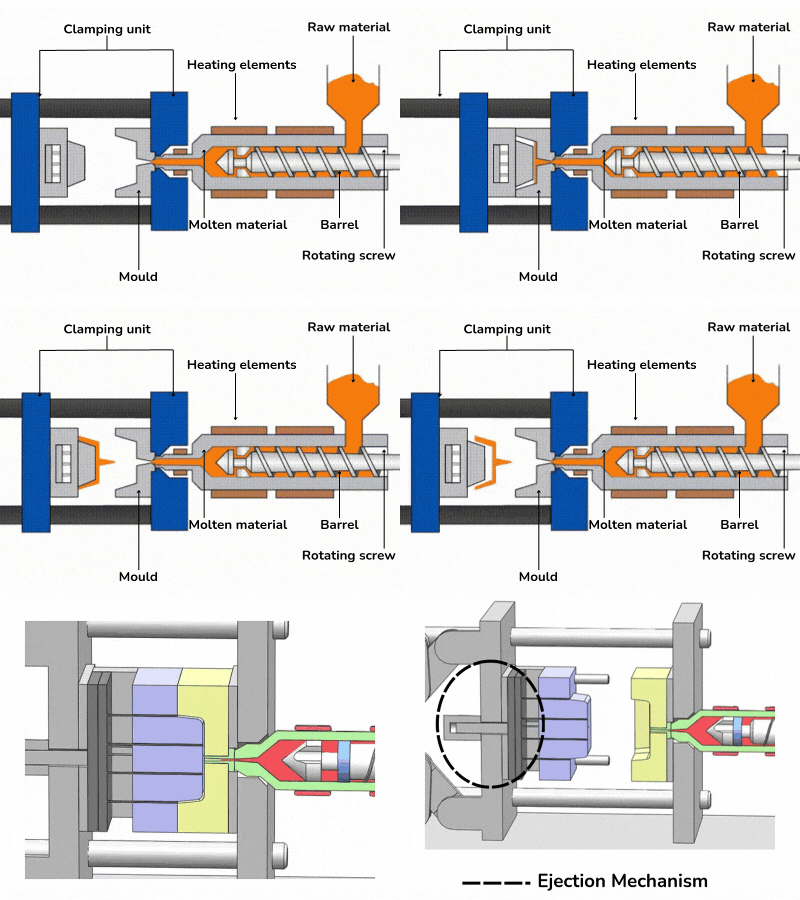
Plastic body coolers entered the market. Manufacturing centralized. Products became standardized. The economics changed completely. Small workshops could not compete with injection molding and large-scale distribution.
An entire ecosystem faded away.
And with it, something else faded too.
Not just livelihoods.
Technological participation.
We Are Slowly Losing the Ability to Build
I often think about the old CRT television repair technicians.
When a television broke down, a technician would arrive carrying instruments, wires, meters and components. They understood transistors, capacitors, resistors and circuit paths. They diagnosed faults. They desoldered components. They replaced individual parts.
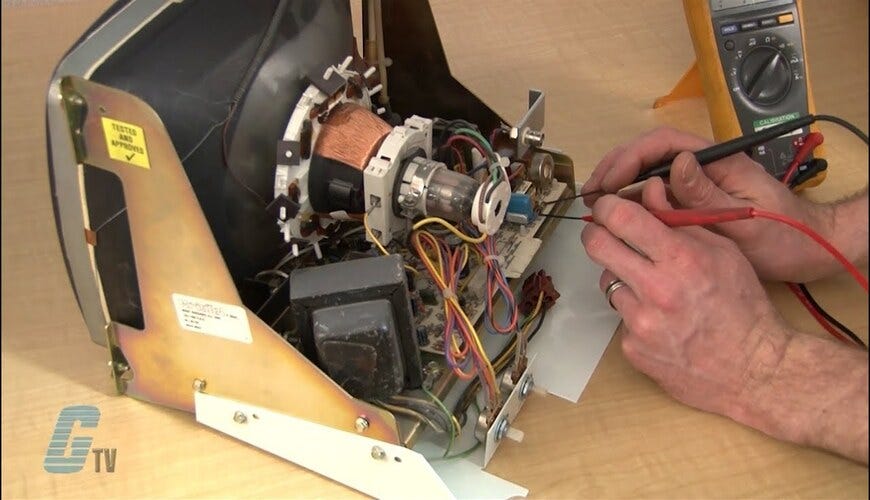
Yes, even that was replacement.
But it was replacement with understanding.
Today many repairs have become module swaps. Entire boards get replaced. Devices are increasingly sealed. You cannot open them easily. You cannot understand them easily. Often, you cannot repair them at all.
A society that only consumes technology gradually loses the capacity to shape it.
That worries me deeply.
Because technological literacy is not merely about using devices. It is about understanding systems. It is about agency. It is about confidence. It is about believing that the world around you is understandable and modifiable.
And perhaps this is why our current project with learners feels emotionally significant to me.
On the surface, we are just building a DIY air purifier.
But underneath, we are trying to rebuild a culture.
The Air Purifier Project
The learners wanted to create an air purifier that was:
affordable,
scientifically tested,
repairable,
understandable,
and effective enough to genuinely improve air quality.
The immediate question was simple:
Can we create a low-cost purifier that actually works?
But very quickly, the project became much larger.
The learners began studying:
filter ratings,
particulate matter,
airflow,
CADR,
fan RPM,
CFM,
static pressure,
noise,
power consumption,
cost optimization.
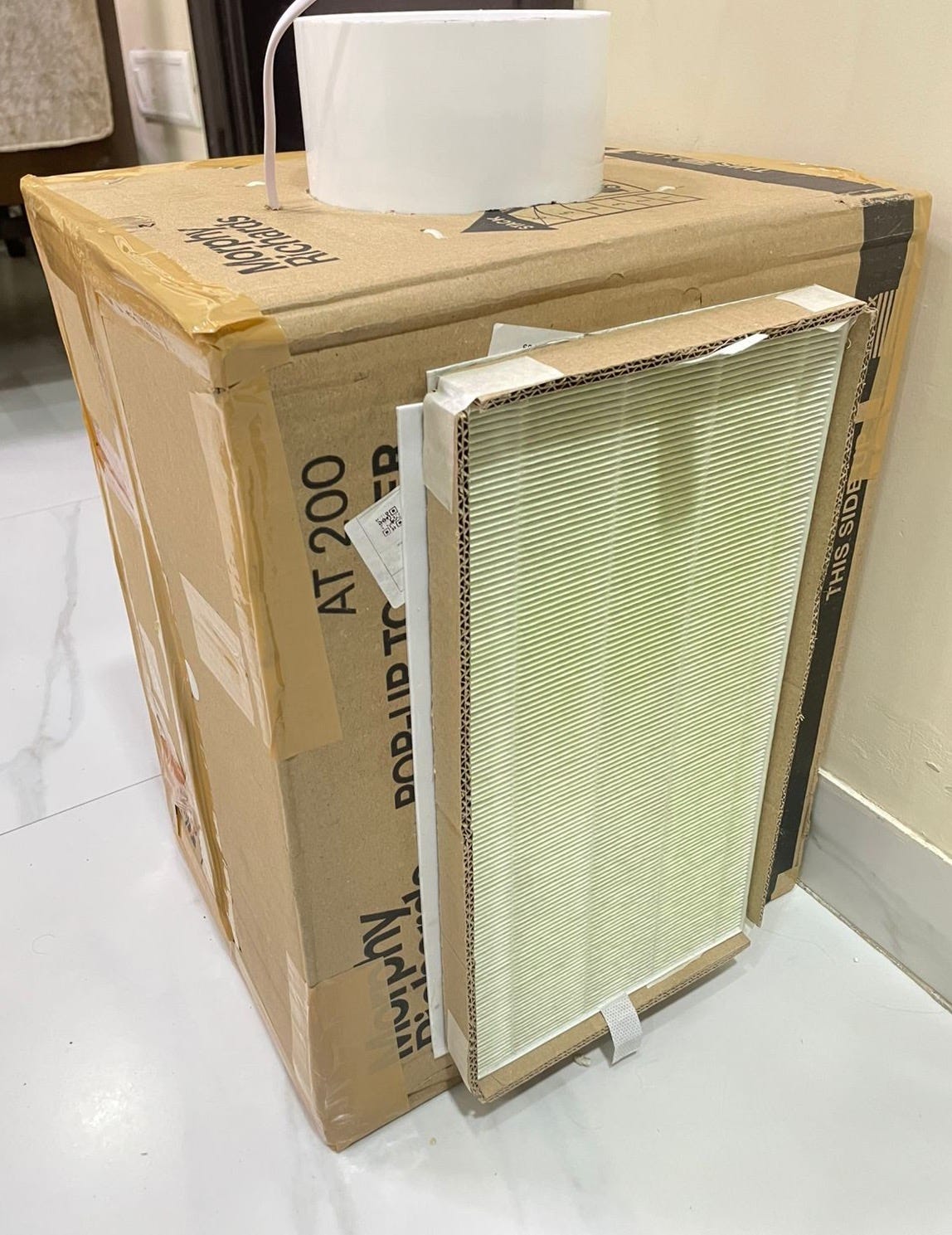
They studied existing literature and developed hypotheses.
Would a HEPA 10 filter be sufficient instead of more expensive filters?
Could inexpensive PC cabinet fans produce acceptable airflow?
Would filter area matter more than fan power?
Should the fan pull air through the filter or push air into it?
Does body geometry influence efficiency?
And then came the most important decision of the project.
We decided that intuition would not be enough.
We would collect data.
From Tinkering to Scientific Thinking
This distinction matters deeply to us at our school.
Many educational projects stop at making.
Children assemble something. It works. Everybody claps. The project ends.
But engineering is not merely making things work.
Engineering is systematic learning.
So the learners began measuring:
PM2.5 reduction,
airflow,
noise levels,
cost-performance ratios,
filter lifespan,
energy consumption.
They documented failures. They compared iterations. They refined assumptions.
The goal was not just to build a purifier.
The goal was to develop what I call the “scientific method muscle.”
Because science does not begin with complete theoretical mastery.
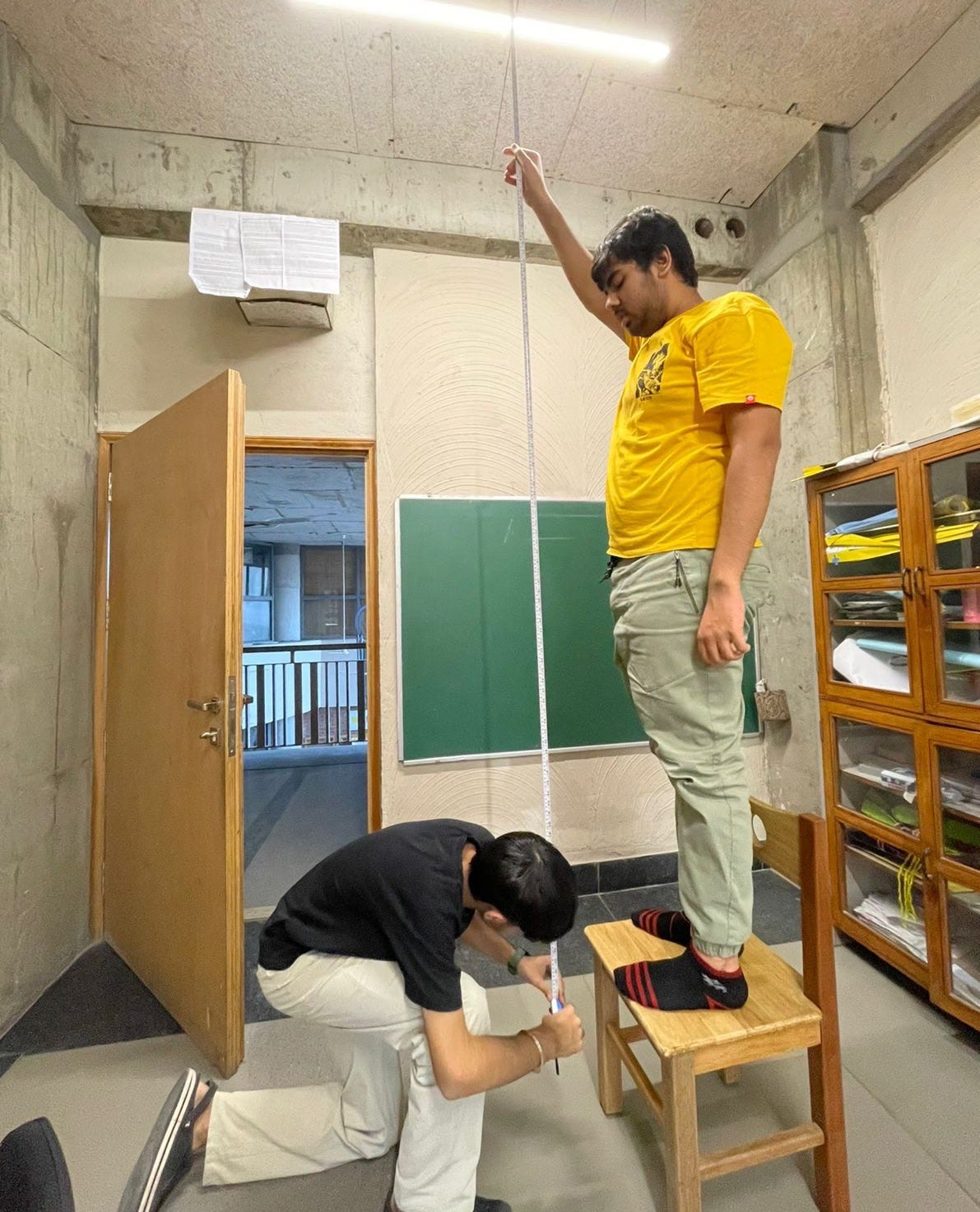
Nobody waits to fully understand fluid dynamics before attempting to move air efficiently. Historically, engineering often precedes theory. Steam engines existed before thermodynamics was formalized. Aircraft existed before turbulence was fully understood.
The important transition is not:
“Do we know everything?”
The important transition is:
“Are we learning systematically from evidence?”
That changes everything.
Craftsmanship Needs Science. Science Needs Craftsmanship.
One realization from this project has stayed with me constantly.
My family’s workshop culture was not unscientific.
It was empirical engineering.
People learned through observation, iteration and tacit knowledge. They knew which designs failed. Which materials rusted. Which airflow patterns cooled better.
But there was one vulnerability.
Much of that knowledge remained undocumented.
It lived in memory, instinct and apprenticeship.
And when industries changed, much of that intelligence disappeared with the people who carried it.
Scientific thinking changes this.
Science converts:
intuition into evidence,
experience into transferable knowledge,
observation into prediction.
The difference between “knowing what works” and “knowing why it works” is profound.
Once you understand why, you can:
improve systematically,
teach others,
generalize principles,
predict outcomes,
optimize intelligently.
And yet, pure scientific abstraction without hands-on engagement also becomes hollow.
Craftsmanship without science becomes fragile.
Science without craftsmanship becomes detached.
Education desperately needs both.
Technology Without Society Is Dangerous
One of the hardest parts of this project was not technical.
It was social.
I increasingly feel that science in isolation from social science becomes deeply limited. Sometimes even dangerous.
Young innovators often imagine:
“I have an idea that will help people.”
But mature design thinking begins with:
“I do not yet understand people enough.”
That shift is difficult.
Because understanding society is harder than understanding machines.
A fan obeys equations.
A society does not.
Students naturally enjoy:
building,
prototyping,
optimizing,
technical elegance.
But asking people questions is uncomfortable.
Understanding habits is messy.
Studying social behavior is ambiguous.
And yet technology cannot exist meaningfully outside human context.
Imagine building an extremely efficient purifier that:
is too noisy,
too expensive to maintain,
difficult to clean,
impossible to repair locally,
intimidating to use,
or dependent on filters that people cannot easily replace.
Technically successful.
Socially useless.
This happens worldwide.
Many technologies fail not because the engineering was poor, but because the designers never truly understood the people they were designing for.
And this is where I think education often fails our learners.
We teach them equations.
We teach them coding.
We teach them fabrication.
But we rarely teach them how to observe society carefully.
That may be one of the most important scientific skills of all.
The Crisis of Commodification
There is another tension I constantly struggle with.
Should meaningful technology always become a polished market product?
Or is there value in keeping systems open, modifiable and understandable?
My instinct has always been to democratize the process.
Understand the science.
Understand society.
Build a DIY version.
Allow people to modify it.
Allow communities to adapt it.
Allow distributed experimentation.
Because once many people begin modifying something, unexpected innovation emerges.
People discover edge cases.
Communities adapt designs to local realities.
Hidden problems become visible.
This is how many powerful technological ecosystems evolved.
But there is also a danger here.
Sometimes DIY culture romanticizes incompleteness.
A market-ready product requires:
robustness,
safety,
repeatability,
manufacturability,
quality control,
long-term reliability.
That rigor matters.
So perhaps the question is not:
“DIY or commercialization?”
Perhaps the real question is:
“How open should technology remain while still becoming reliable and scalable?”
I do not yet know the answer.
But I know the question matters.
What Are We Really Building?
Sometimes I wonder whether the purifier is just an excuse.
An excuse to teach students:
how to think scientifically,
how to engage with society,
how to document knowledge,
how to work with uncertainty,
how to negotiate tradeoffs,
how to remain intellectually humble.
Because the deeper problem today is not merely pollution.
It is technological passivity.
We are surrounded by machines we cannot understand, systems we cannot modify and technologies we cannot meaningfully participate in.
Perhaps education must push back against that.
Perhaps learners need to feel that technology is not magic.
That it can be opened.
Questioned.
Measured.
Improved.
Reimagined.
Perhaps building an air purifier was never really about the air purifier.
Perhaps it was about rebuilding the human capacity to understand and shape the world again.